Address
Hopkins Village
Work Hours
Monday to Friday: 7AM - 7PM
Weekend: 10AM - 5PM
Address
Hopkins Village
Work Hours
Monday to Friday: 7AM - 7PM
Weekend: 10AM - 5PM


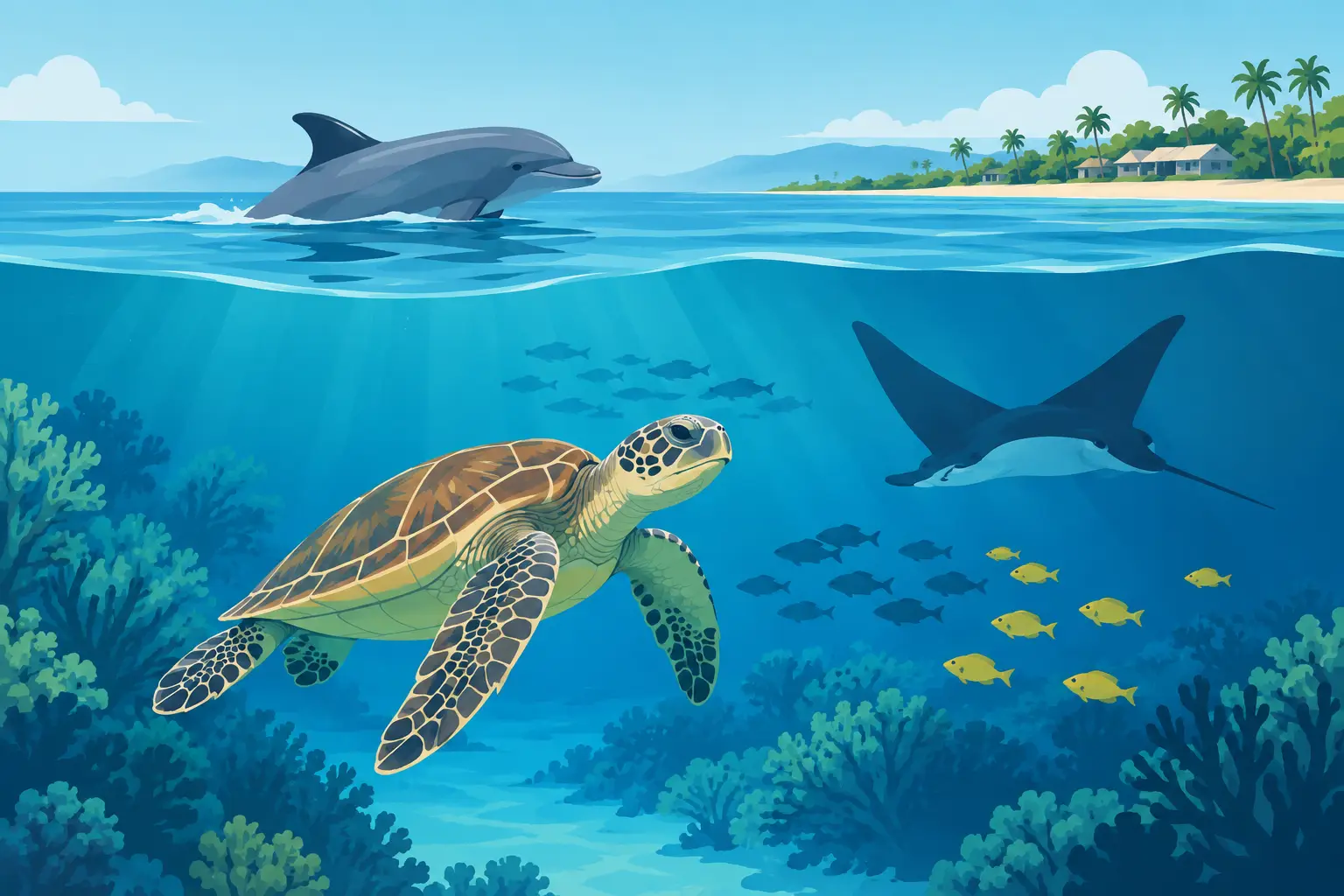
Meet the marine wildlife near Hopkins, from reef fish and rays to turtles and dolphins, with local tips for respectful, unforgettable days on the water.
The first clue is often a shadow over the reef. It might be a southern stingray easing across pale sand, a sea turtle lifting for air, or a school of blue tangs flashing past the coral. Marine wildlife near Hopkins is not a staged attraction – it is part of a living reef system, and every day on the water can bring a different surprise.
For visitors who want more than a quick look through a mask, the Belize Barrier Reef offers the kind of encounters that stay with you: a curious fish at the edge of a coral head, a dolphin surfacing beside the boat, or the hush that falls when everyone spots a turtle gliding below. The best experiences come with patience, a knowledgeable local guide, and a genuine respect for the animals that call these waters home.
Hopkins sits close to coastal flats, mangrove-lined lagoon systems, seagrass beds, and the Belize Barrier Reef. Each habitat supports different animals, which is why a day that begins with reef snorkeling can also include birds along the shoreline and dolphins in open water.
The reef is the headline act. Its hard and soft corals create shelter, feeding areas, and nursery grounds for countless fish and invertebrates. Seagrass meadows are just as valuable, especially for juvenile fish, rays, and turtles. Mangroves may not look as dramatic as a coral wall, but their tangled roots provide a protected start for many species before they move farther offshore.
Conditions matter. Calm, clear days make snorkeling visibility better, while seasonal changes influence what guides see most often. Wildlife is never guaranteed, and that is exactly what keeps it wild. A responsible captain will never promise a turtle or dolphin on command, but they will know the routes, habitats, tides, and weather patterns that give your group the best chance of meaningful sightings.
Even first-time snorkelers quickly understand why Belize belongs on so many ocean lovers’ wish lists. Parrotfish crunch algae from the reef with beak-like mouths, helping keep coral surfaces clear. Sergeant majors hover in striped groups, while French angelfish, butterflyfish, wrasse, and squirrelfish bring color to every coral formation.
Look closely and the reef becomes more interesting. A small cleaner shrimp may be working from a crevice. A spotted moray eel might peer out from beneath a ledge. Barracuda sometimes hold still in the blue, looking almost motionless until they turn and disappear. These are not animals to chase. Give them space, move slowly, and let the reef reveal itself.
Southern stingrays are among the most memorable sights over sandy channels and seagrass beds. Their movement is calm and graceful, with wings that seem to fly just above the bottom. Eagle rays can also appear, often moving more quickly through open water with their distinctive spotted backs.
Never touch a ray or corner one for a photo. The right encounter is one where the animal chooses its own path and you simply have the privilege of watching. The same rule applies to nurse sharks, which may rest beneath ledges or cruise slowly near reef structures. They are generally calm animals, but they deserve distance and respect.
Green turtles and hawksbill turtles are possible sightings around Belize’s reef and seagrass habitats. A green turtle may be feeding in shallow grass, while a hawksbill is often associated with reef areas where it can browse among sponges and coral.
Seeing a turtle underwater changes the pace of a snorkel. People naturally become quieter. Resist the urge to swim directly over it or block its route to the surface. Keep a respectful distance, stay to one side, and allow it to continue feeding or traveling without pressure. A few peaceful minutes are far better than a rushed close-up that disturbs the animal.
Dolphin sightings can turn a boat ride into a story your group tells for years. Bottlenose dolphins may surface in small groups, sometimes traveling alongside a boat for a few moments before heading on. Enjoy the view, but do not pursue them or attempt to swim with them unless your guide determines it is safe, legal, and fully on the animals’ terms.
Manatees are also found in Belizean coastal waters, especially around sheltered lagoon and seagrass areas. They are more elusive than dolphins and should be treated with extra care. Quiet operation, slow speeds, and proper distance protect these gentle animals from stress and boat strikes. Your best chance is often a patient, low-impact cruise rather than a fast search.
You may also spot frigatebirds circling overhead, brown pelicans diving near baitfish, or ospreys watching from a perch. The sea is connected to the shore, and a great wildlife day is rarely limited to what is beneath the surface.
The best wildlife viewing is active without being intrusive. Bring a well-fitting mask and fins, listen carefully to the safety briefing, and tell your guide your comfort level before entering the water. If you are new to snorkeling, a private or small-group trip gives you more room to settle in without feeling rushed.
Once in the water, float rather than kick hard. Fast finning stirs sand, reduces visibility, and can make animals retreat. Keep your hands away from coral, even when the water feels shallow. Coral can be fragile, and some species take years to recover from a single careless touch.
A few habits make a real difference:
Photography is welcome, but the animal comes first. Turn off flash underwater, avoid crowding a subject, and take the photo from where you naturally are. A wide shot of a turtle moving through blue water often tells a better story than a forced close-up ever could.
A wildlife-focused outing does not need to feel like a lecture. It can be the heart of a full Belizean day on the water. Start with a reef snorkel when light and visibility are at their best, then slow down on a quiet beach or island. If you enjoy fishing, you may see the same ecosystems from another perspective – baitfish moving near the surface, birds signaling activity, and reef edges that support larger predators.
For families, the right itinerary depends on the youngest swimmer and the group’s confidence in open water. Shallow, protected snorkeling areas are often the better choice than chasing a more distant site. Couples may prefer a private pace with time for a beach stop or a sunset cruise afterward. Serious anglers and spearfishers should be ready for a more active day, while still following all local rules, size limits, and protected-area guidance.
That local judgment is where a family-owned operator can make the day feel personal rather than processed. At Sea Ready Adventures, experienced local guides can help shape an outing around your group, the conditions, and the kind of marine moments you hope to experience – safely, reliably, and with real Belizean hospitality.
A healthy reef is more than the animals that make the photo album. Sponges filter water. Parrotfish help manage algae. Small reef fish feed larger fish. Seagrass stabilizes sediment and provides shelter for young marine life. When visitors treat the water with care, they help protect the entire system, including creatures they may never notice.
Choose guides who respect marine regulations, do not anchor carelessly on coral, and are willing to skip or adjust a plan when weather or wildlife conditions call for it. Flexibility is not a disappointment – it is part of responsible ocean travel. The sea sets the terms, and the best guides know how to make those terms work in your favor.
Bring your curiosity, leave the reef exactly where you found it, and give the day enough time to unfold. Somewhere between the first splash and the ride back toward shore, the marine life near Hopkins has a way of making visitors feel less like spectators and more like grateful guests.